In this guide, we’ll explore the basic types of wood fillers for wood applications.
Most wood fillers dry hard, usually require sanding and finishing or painting however some remain flexible after sanding and are essential for filling in cracks, rot and imperfections in wood surfaces where expansion is common such as exterior wood. Choosing the right type of wood filler depends on the specific needs of my project, whether it’s for indoor or outdoor use. Most brands can be finished or painted but I always follow the manufacturer’s safe use directions. I always overfill the defect slightly to allow for shrinkage.
Caution – Most fillers are made of chemical compounds and solvents that can negatively affect my health so I always follow all safety information available from the manufacturer. Use adequate ventilation, safety gloves, a high-quality respirator or dust mask and safety glasses. When using flammable products, I never work around open flames. Safety is a personal responsibility and I always use common sense to keep you and your property safe.
1. Indoor vs. Outdoor Use:
In my experience most water-based fillers, filler sticks, putty and burn in sticks are best for small indoor applications, while solvent-based and epoxy fillers are better suited for larger or outdoor applications but all are equally good indoors for small dents and chips. Water based fillers are getting better for outdoor use, just check the label.
2. Paintability vs. Stainability:
If I plan to paint over the repair, most of the fillers mentioned in this article work equally well for us. For projects that require staining, I use a high-quality stainable filler. Even though it is called stainable, I always test the filler and stain on a scrap piece.
3. Large Repairs:
4. Cracks and Gaps:
I look for a flexible filler or soft, putty sticks rated by the manufacturer for this purpose. Wood continually expands and contracts so consider this when filling cracks. Cracks are notorious for widening and shrinking with time, so I always check the label first to make sure it will remain flexible with the wood and are compatible with my choice of finish. Most fillers will look good for a while but eventually you will start noticing the cracks and gaps coming back. I believe two-part flexible fillers are the best for gaps because they remain flexible while remaining durable enough for outside use.
Main Types of Wood Fillers We Use
1. Water-Based Wood Fillers
Water-based wood fillers are usually made from wood fibers or cellulose mixed with water. They are ideal for indoor projects due to their quick drying time and ease of use. These fillers are also usually non-flammable, lower in odor and easy to cleanup with water until dry. However, they may shrink slightly as they dry and are usually not as durable as some others for outdoor applications unless sealed properly. Dry time before sanding is fairly quick on small defects. Clean up excess with a dampened rag and lightly sand the edges before finishing. I like using these when working in my home or around those folks more sensitive to solvent odors like my wife.
Best For: Small dents, chips and nail holes in indoor woodwork.
Pros: Fast drying, low odor, good bond strength, accepts stains, easy cleanup while wet.
Cons: Can shrink or crack more than some others if applied improperly or too thick.
2. Solvent-Based Wood Fillers
Solvent-based wood fillers contain flammable, chemical solvents and are typically more durable and water-resistant. Some dry faster than water-based fillers and provide excellent adhesion and durability, making them ideal for outdoor use and high-traffic areas. These are my go-to fillers for use on raw wood before sanding because they sand easily and dry quickly. Clean up excess with a rag dampened with the proper solvent and once dry lightly sand the edges to smooth and remove excess filler before finishing.
Best For: Interior and exterior wood repairs plus cabinet and furniture applications.
Pros: Usually, they are fairly fast drying, weather-resistant and bond well.
Cons: Flammable, strong solvent odor and require solvents for cleanup.
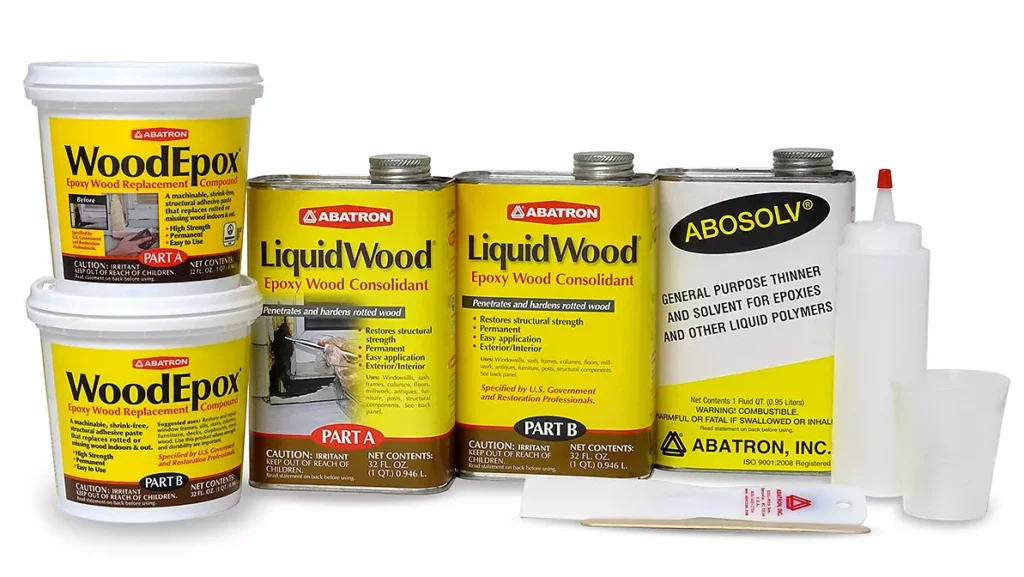
3. Epoxy Wood Fillers
Epoxy wood fillers are two-part compounds that bond very well to wood and harden chemically into a nice workable surface. These fillers are extremely durable, moldable and can be used for larger size repairs, including rotted wood replacement and wear surfaces. Colorants can be added before mixing to match the stain color but epoxies do not accept much color after curing. They can be sanded easily once cured. I like to use the color epoxy sticks for most indoor applications and two-part paste epoxy fillers work best for me on outdoor projects such as rotting door edges. Once cured you can remove the excess using a detail rasp if necessary and then sandpaper. I usually start with 120 grit garnet SP on a sanding block and move to 220 grit for final sanding.
Best For: Larger repairs requiring filler, surfaces prone to hard wear and rotted wood restoration on exterior doors windows and woodwork.
Pros: Highly durable, waterproof, strong bonding, some brands dry very fast and can be sanded within 15-20 minutes.
Cons: More expensive, strong solvent odor, requires good mixing, most brands have a short work time so prepare to move quickly.
4. Latex Fillers
Latex wood fillers, sometimes called Plastic Wood, are easy to use, dry quickly, can be sanded smoothly, and are paintable. However, they are not always the best choice for staining, as they may not absorb stain evenly.
Best For: Minor surface repairs, painted wood surfaces.
Pros: Fast drying, easy to sand.
Cons: May not take stain well, less durable for heavy-duty repairs.
5. Burn-in-Stick Fillers
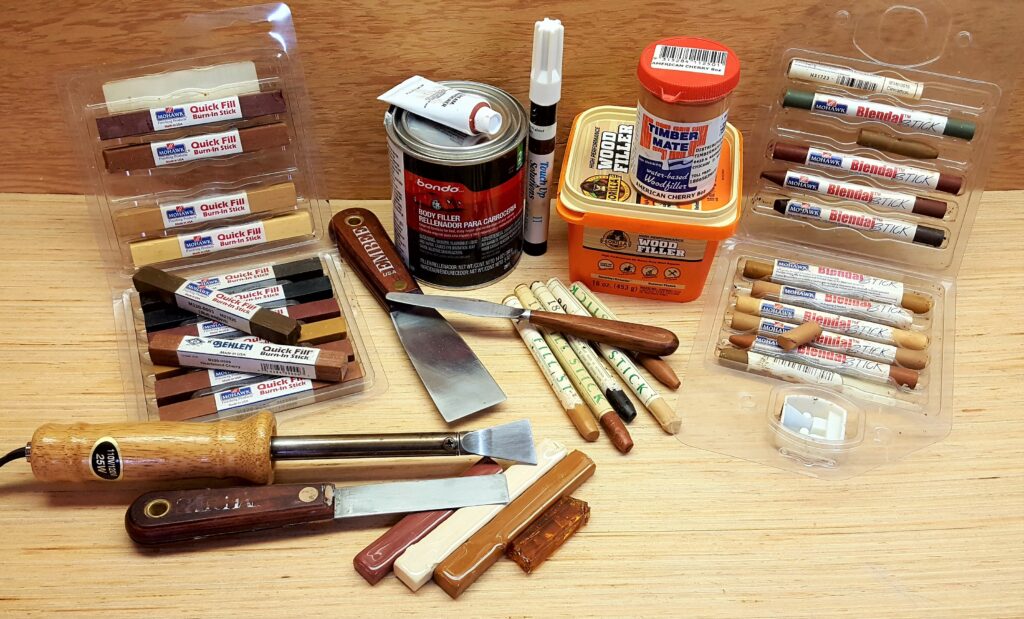
These fillers referred to as Hot Melt Sticks, Shellac Sticks or Lacquer Sticks, are made from proprietary finish composites and are available in a wide selection of stain colors. They are ideal only for indoor projects. These fillers are melted with a heated iron before application and are extremely quick drying, easily sanded, medium odor and match most stain colors (clear and transparent sticks available). They require special burn-in irons or ovens and knives to apply and training and practice to use successfully. Carefully paint or seal them with shellac or most clear finishes. I have been using these for almost 50 years to make practically invisible repairs.
Best For: Small cracks chips, scratches and holes in indoor furniture.
Pros: Dry in seconds, great for color matching and almost invisible repairs. Cons: They do not take stains, require practice to use, too brittle for large areas.
6. Putty Stick Fillers
These fillers referred to as Filler Sticks, Wax Sticks or Crayon Sticks, made from proprietary finish composites and are available in a wide selection of stain colors. They are only for indoor projects. These fillers remain soft like a wax candle and are easily applied by rubbing the stick into the void or applied with putty knives of various sizes. These handy sticks can also be quickly melted using a heated knife and mixed to make custom colors. They are low in odor and match most stain colors. Carefully paint or seal them with shellac or most clear finishes.
Best For: Small cracks chips, and holes in indoor woodwork.
Pros: Dry in seconds, flexible and great for color matching and almost invisible repairs.
Cons: Do not take stains, they remain softer than most other fillers. Not for high wear areas.
Conclusion
Understanding the different types of wood fillers can helps me to choose the best one for my specific project. Whether I am fixing a minor scratch or repairing rotted wood, selecting the right filler ensures a long-lasting, professional finish.